



Blog
Supreme Court And High Courts Increasingly Shaping Government Policy Decisions Across India

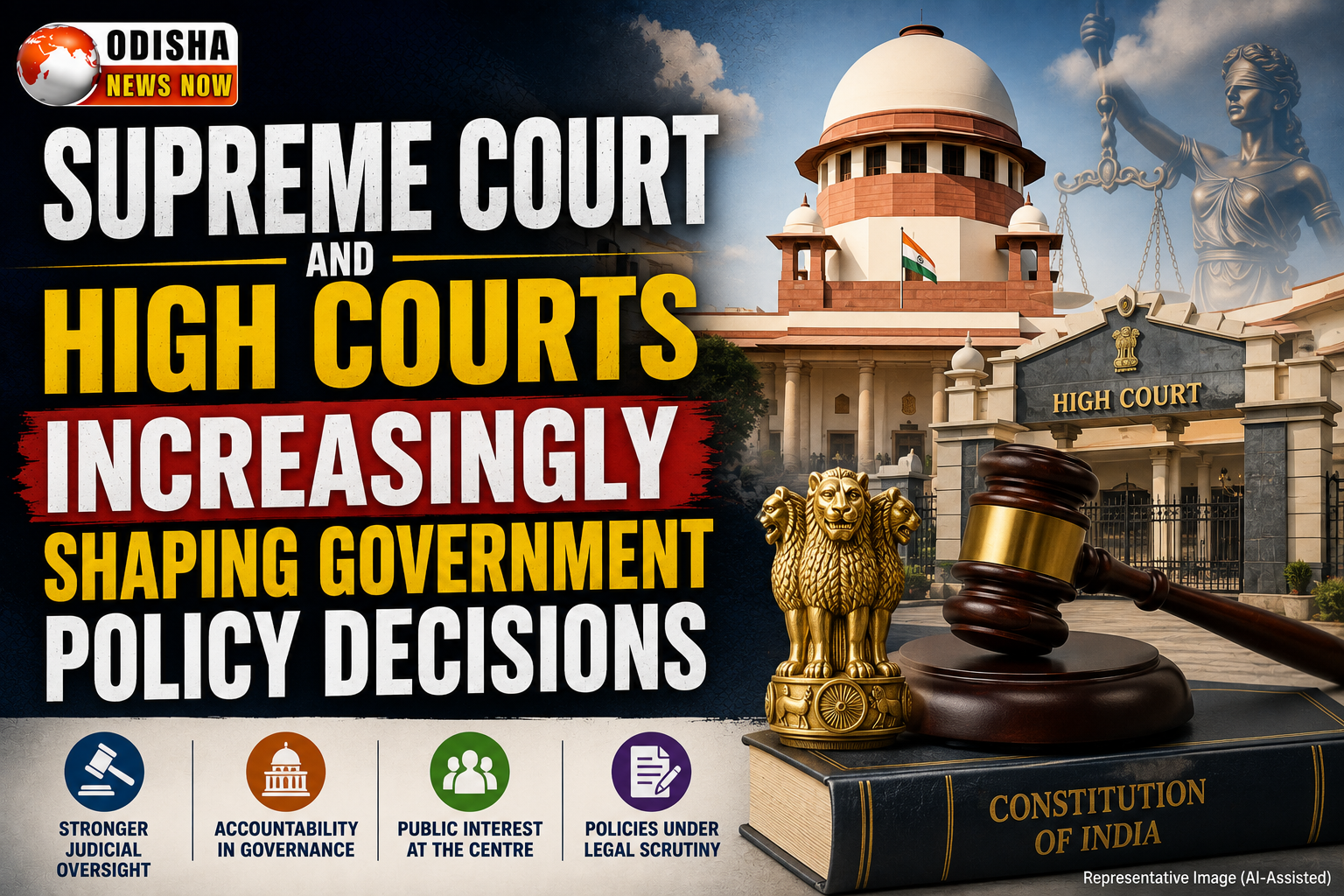
New Delhi: India’s judiciary is playing an increasingly influential role in shaping public policy, governance and administrative decisions, with the Supreme Court and various High Courts frequently stepping into matters that directly affect millions of citizens.
From recruitment processes and reservation policies to environmental regulations, election-related disputes, governance reforms and civil rights issues, courts have become key institutions influencing how governments function and implement policies.
The growing impact of judicial interventions has sparked an ongoing national debate about the balance between executive authority, legislative power and judicial oversight.
Why Judicial Decisions Are Drawing More Attention
In recent years, several important policy matters have reached courts after being challenged by political parties, civil society groups, activists, professional organizations and affected citizens.
As a result, many government decisions now face legal scrutiny before they can be fully implemented. Court rulings often determine whether policies proceed as planned, require modifications or are struck down altogether.
This has increased public interest in judicial proceedings, with major hearings now generating nationwide discussions across television, digital media and social media platforms.
Courts As Guardians Of Constitutional Principles
Legal experts argue that judicial intervention is a crucial part of India’s constitutional framework.
The judiciary is responsible for ensuring that government actions remain consistent with constitutional provisions and fundamental rights. Through judicial review, courts examine whether laws and executive decisions comply with constitutional requirements.
Supporters of judicial activism believe courts serve as an important check on government power and help protect citizens against arbitrary administrative actions.
Debate Over Judicial Activism
At the same time, judicial intervention in policy matters has generated debate among political leaders and constitutional experts.
Critics argue that excessive involvement in governance-related issues may blur the separation of powers between the judiciary, legislature and executive.
According to this view, elected governments should have greater freedom to formulate and implement policies without frequent judicial intervention unless there is a clear constitutional violation.
Supporters, however, contend that courts often step in only when concerns relating to legality, transparency, accountability or fundamental rights are raised.
Impact On Governance
The influence of courts can now be seen across multiple sectors:
- Recruitment and employment policies
- Education and admission procedures
- Reservation and quota systems
- Environmental protection measures
- Urban development projects
- Election-related disputes
- Public welfare schemes
- Administrative reforms
Many policy decisions now include legal risk assessments from the outset because governments anticipate possible judicial challenges.
Officials increasingly consult legal experts during policy formulation to ensure compliance with constitutional and statutory requirements.
High Courts Also Playing A Major Role
While the Supreme Court remains the country’s highest judicial authority, High Courts across states have also become powerful centres of policy review.
Several High Court judgments have significantly influenced state government decisions on recruitment, education, land acquisition, local governance and public administration.
In many cases, High Court rulings have led governments to revise or reconsider policies affecting large sections of the population.
Growing Public Interest
The rise of digital media has further increased public engagement with judicial developments.
Important court hearings now generate extensive discussions on social media, while judgments often become headline news across major national publications.
As governance becomes increasingly complex, legal challenges to policy decisions are also becoming more common, making the judiciary an even more influential institution in India’s democratic system.
What Lies Ahead?
Constitutional experts believe the relationship between courts and governments will remain one of the most closely watched aspects of Indian democracy.
As governments continue to introduce reforms in areas such as employment, technology, education, welfare and governance, judicial scrutiny is likely to remain a significant factor in determining how those policies ultimately take shape.
The debate over judicial activism versus executive autonomy is expected to continue, but one thing is clear: the Supreme Court and High Courts today play a crucial role in shaping the direction of public policy in India.
- Trending
- Guru Purnima 2026: In The Age Of AI, Do We Need Gurus More Than Ever?

- Niladri Bijay 2026: Why Lord Jagannath Must Offer Rasagola Before Returning Home

- Adhara Pana 2026: Why A Sacred Drink Is Offered To Lord Jagannath And Then Deliberately Spilled

- Suna Besha 2026: The One Day Lord Jagannath Appears Adorned In Gold

- Odisha Police Arrest 9th Member of Inter-State Ganja Syndicate; Assets Worth Nearly ₹4 Crore Frozen