


Blog
50 Years After Emergency: Why The 1975 Crisis Still Shapes Indian Politics Today

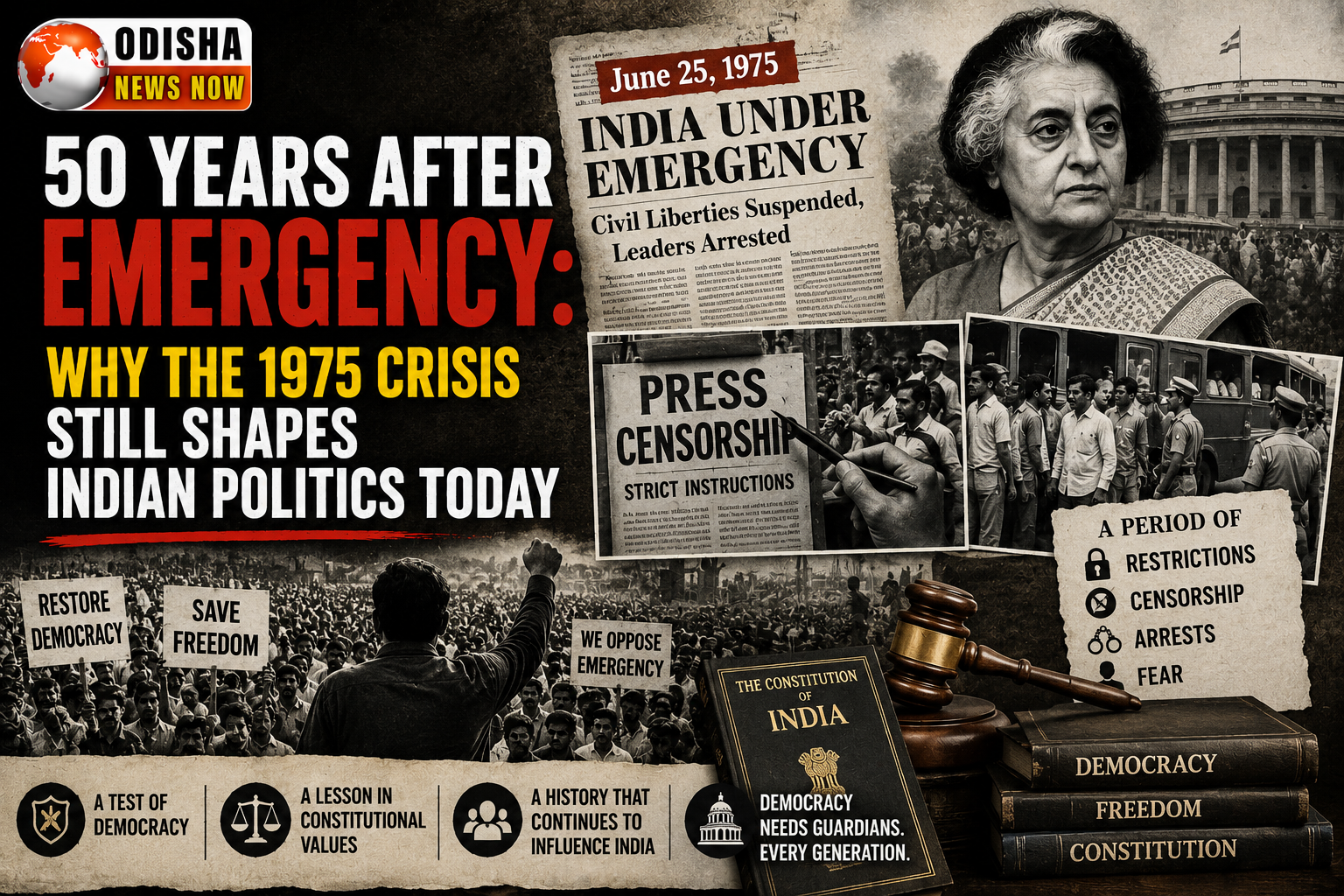
On June 25, 1975, India entered one of the most debated chapters in its democratic history.
Late that night, a National Emergency was declared across the country, triggering a series of events that would leave a lasting impact on politics, civil liberties, the media and public institutions.
Fifty-one years later, the Emergency remains a subject of intense discussion, political disagreement and historical reflection.
For older generations, it was a period they witnessed firsthand. For younger Indians, it is often a chapter in history books. Yet the questions raised during that period continue to influence political debates even today.
What Was The Emergency?
The Emergency was declared on June 25, 1975, under Article 352 of the Constitution, citing internal disturbances.
The move gave the central government extraordinary powers and marked the beginning of a period that lasted until March 1977.
During this time, several political leaders were arrested, public protests were restricted and civil liberties faced significant limitations.
The period remains one of the most controversial episodes in independent India’s history.
Why Was It Declared?
The political atmosphere in the months leading up to the Emergency was highly turbulent.
Economic challenges, growing opposition movements and political unrest had intensified across different parts of the country.
A court verdict that challenged the validity of then Prime Minister Indira Gandhi’s election further increased political tensions.
Against this backdrop, the Emergency was proclaimed.
Impact On Media And Public Life
One of the most widely discussed aspects of the Emergency was the impact on the press.
Newspapers operated under restrictions, and many publications faced censorship requirements.
Journalists, editors and media organizations often had to navigate strict limitations on what could be published.
The period is frequently cited in discussions about press freedom and the role of independent journalism in a democracy.
Arrests And Political Crackdown
Many opposition leaders and activists were detained during the Emergency.
Political activity was significantly curtailed, and dissenting voices often faced restrictions.
The events of that period continue to be examined by historians, political analysts and legal scholars.
Why The Emergency Still Matters
More than five decades later, the Emergency remains relevant because it raises enduring questions about the balance between state power and individual freedoms.
It is frequently referenced during debates involving constitutional rights, freedom of expression, democratic institutions and government accountability.
Political parties across the spectrum continue to interpret the Emergency through different lenses, ensuring that it remains part of India’s public discourse.
Lessons For New Generations
For many young Indians, the Emergency serves as a reminder of how democratic systems can be tested during periods of political crisis.
It highlights the importance of constitutional safeguards, institutional checks and public participation in democratic processes.
Regardless of political viewpoint, the Emergency occupies a unique place in India’s modern history because of its profound impact on governance and public life.
A Chapter That Continues To Spark Debate
More than fifty years after it began, the Emergency continues to generate discussion, reflection and disagreement.
Historians study it, politicians debate it and citizens revisit it as a defining moment in India’s democratic journey.
As the country marks another anniversary of June 25, the events of 1975 remain a reminder that democracy is not only about elections, but also about institutions, freedoms and public trust.
- Trending
- Guru Purnima 2026: In The Age Of AI, Do We Need Gurus More Than Ever?

- Niladri Bijay 2026: Why Lord Jagannath Must Offer Rasagola Before Returning Home

- Adhara Pana 2026: Why A Sacred Drink Is Offered To Lord Jagannath And Then Deliberately Spilled

- Suna Besha 2026: The One Day Lord Jagannath Appears Adorned In Gold

- Odisha Police Arrest 9th Member of Inter-State Ganja Syndicate; Assets Worth Nearly ₹4 Crore Frozen